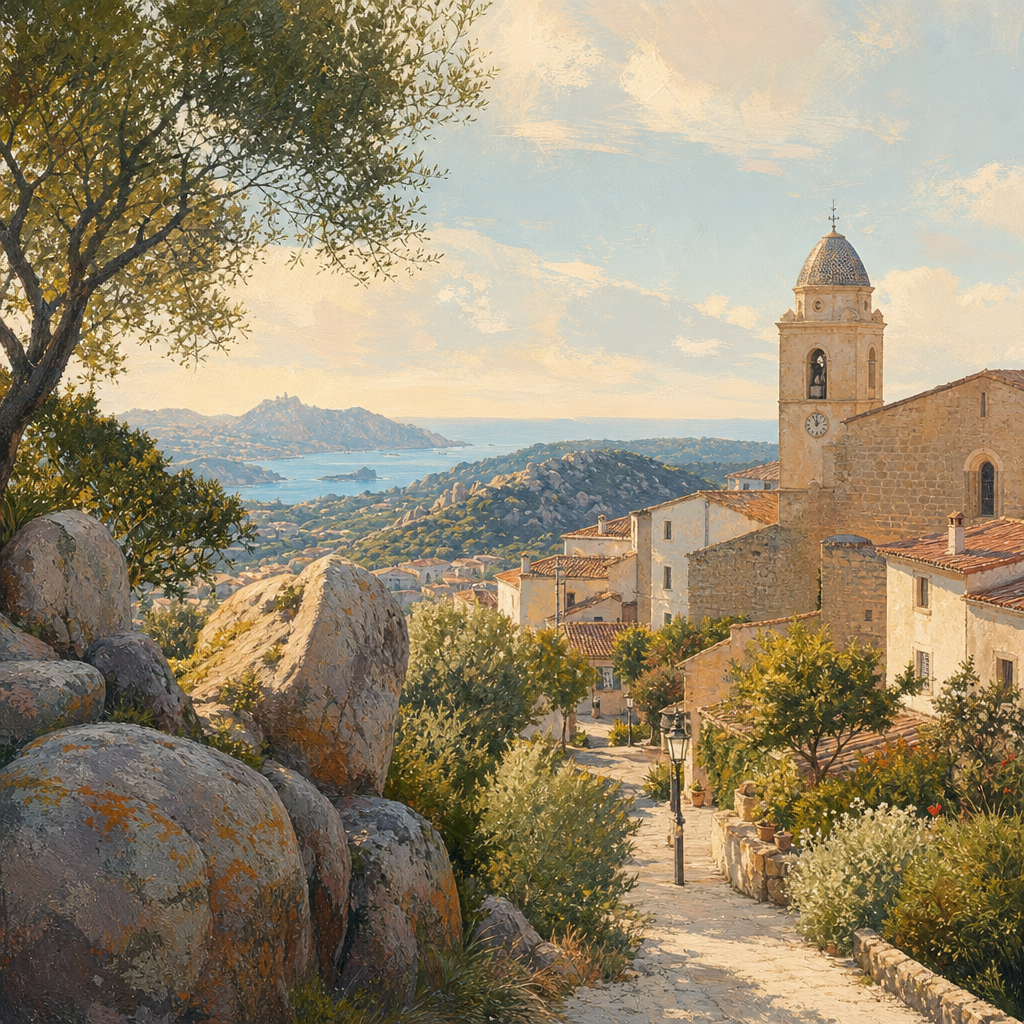
Costa Smeralda and the Mediterranean lifestyle are two concepts that over time have become almost inseparable. This stretch of coastline in northeastern Sardinia represents far more than a renowned seaside destination. It is a place where nature, architecture, culture, and urban planning vision intertwine. Moreover, among bays with crystal-clear waters, granite rocks sculpted by the wind, and villages designed in harmony with the landscape, a story emerges that brings together local tradition and openness to the world.
- The Origins of the Costa Smeralda and the Birth of a Territorial Vision
- Porto Cervo: the symbol of the Costa Smeralda
- Architecture and landscape: a distinctive balance
- Costa Smeralda and Mediterranean lifestyle
- Sea, yachting, and the relationship with nature
- Cultural identity and international image
- A legacy that endures over time
The Origins of the Costa Smeralda and the Birth of a Territorial Vision
To understand the identity of the Costa Smeralda, it is necessary to look at its origins. Until the mid-twentieth century, this part of Gallura was characterized by a limited human presence and a coastal environment that remained largely unspoiled. The main activities were tied to agriculture and pastoralism. Meanwhile, coves and beaches were frequented primarily by local communities.
The turning point came in the early 1960s thanks to the vision of Prince Karim Aga Khan IV. The goal was not simply to develop a tourist area. On the contrary, the aim was to create a project capable of enhancing the landscape without compromising its authenticity. The founding of the Costa Smeralda Consortium marked the beginning of a transformation that would change the face of the area.
One of the most innovative aspects was the decision to avoid intensive building development. As a result, architects and urban planners designed settlements integrated with nature, respecting the contours of the land, the vegetation, and the environmental characteristics of Gallura.
Porto Cervo: the symbol of the Costa Smeralda
Porto Cervo is the most representative center of the Costa Smeralda and embodies its design philosophy. Built around a striking natural inlet, the village was conceived as a harmonious ensemble of squares, narrow streets, panoramic terraces, and open spaces.
Among the most iconic places, the following stand out:
- The Piazzetta of Porto Cervo.
- The Old Port Promenade.
- The Stella Maris Church.
- The marina.
- The terraces overlooking the bay.
More than just a tourist center, Porto Cervo represents a model of Mediterranean social life. Indeed, its public spaces encourage meeting, strolling, and outdoor living.
Over the decades, the village has become one of Sardinia’s most recognizable places. In doing so, it has helped shape the international image of the Costa Smeralda.
Architecture and Landscape: A Distinctive Balance
One of the elements that makes the Costa Smeralda unique is the relationship between architecture and the natural environment. From the earliest stages of development, designers chose to create buildings capable of engaging in dialogue with the land rather than imposing themselves upon it.
Costa Smeralda architecture is characterized by:
- Use of local stone.
- Natural colors and light-colored plaster.
- Soft volumes and irregular lines.
- Panoramic terraces overlooking the sea.
- Integration of buildings among rocks and vegetation.
- No particularly tall buildings.
This approach has made it possible to maintain a strong visual continuity between the landscape and the built environment. In fact, many visitors perceive the buildings as an integral part of their surroundings.
Historic structures such as the Hotel Cala di Volpe, the Romazzino and the Pitrizza have also helped define a recognizable architectural language. Over time, this style has become one of the symbols of the entire area.
Costa Smeralda and Mediterranean lifestyle
When speaking of the Costa Smeralda and the Mediterranean lifestyle, the reference is not only to luxury tourism. Rather, the concept encompasses a way of life connected to the land, the climate, and the constant relationship with the sea.
This lifestyle is based on several essential elements:
- The central role of open spaces.
- Daily contact with nature.
- Enhancing the quality of spaces.
- Culture of hospitality.
- Rhythms influenced by light and the seasons.
The elegance associated with the Costa Smeralda stems above all from the pursuit of harmony. In other words, attention to detail, respect for the landscape, and the quality of public spaces create a distinctive atmosphere that goes beyond the glamorous image often associated with the destination.
Strolling through the squares of Porto Cervo, watching the sunset over the granite rocks, or sailing along the coast offers a glimpse into the essence of a lifestyle deeply connected to the Mediterranean environment.
Sea, yachting, and the relationship with nature
The sea represents the heart of Costa Smeralda’s identity. It is not merely a tourist resource. Rather, it is an element that has influenced urban planning, economic activities, and the very perception of the territory.
Boating has played a fundamental role in the development of the Costa Smeralda from the very beginning. The port of Porto Cervo has become one of the Mediterranean’s main points of reference for pleasure boating. Moreover, maritime culture continues to define the area. For more information on Mediterranean environmental heritage, it is useful to consult the UNESCO World Heritage Centre.
Among the most famous beaches are:
- Liscia Ruja.
- Capriccioli.
- La Celvia.
- Romazzino.
- Prince’s Beach.
- Pevero.
These places are appreciated not only for the clarity of their waters, but also for the natural setting that surrounds them. Moreover, the Mediterranean scrub, granite formations, and coastal landscape help create an environment of extraordinary value.
The protection of this heritage remains a fundamental priority. Indeed, the identity of the Costa Smeralda depends largely on preserving its environmental balance.
Cultural Identity and International Image
Over the years, the Costa Smeralda has become a global icon. Photographs, magazines, editorial productions, and communication campaigns have helped spread its image around the world.
However, behind this renown lies a more complex cultural reality. The history of Gallura, local traditions, and the centuries-old relationship between people and the land continue to represent an essential component of the area’s identity.
The strength of the Costa Smeralda lies precisely in its ability to bring together:
- Tradition and innovation.
- Local culture and international openness.
- Economic development and landscape protection.
- Contemporary architecture and Mediterranean references.
For this reason, the area has become a model studied and appreciated far beyond Sardinia’s borders.
A Legacy That Endures Over Time
The transformation of the Costa Smeralda represents one of the most significant territorial projects in the contemporary Mediterranean. What makes this place special is not only the beauty of its beaches or the international fame of its ports. It is also its ability to maintain a constant dialogue between nature, architecture, and culture.
Porto Cervo, its historic structures, coastal landscapes, and public spaces tell of a vision that sought to enhance the territory without giving up its original identity. Therefore, understanding the Costa Smeralda means going beyond its tourist image and recognizing the value of a project that succeeded in transforming part of Gallura into a symbol of the Mediterranean lifestyle.
Even today, this area continues to evolve. At the same time, it keeps the pursuit of a balance between development, environmental conservation, and cultural enhancement at its core. It is precisely this ability to renew itself without losing its connection to its roots that makes it a unique point of reference in the Mediterranean landscape.