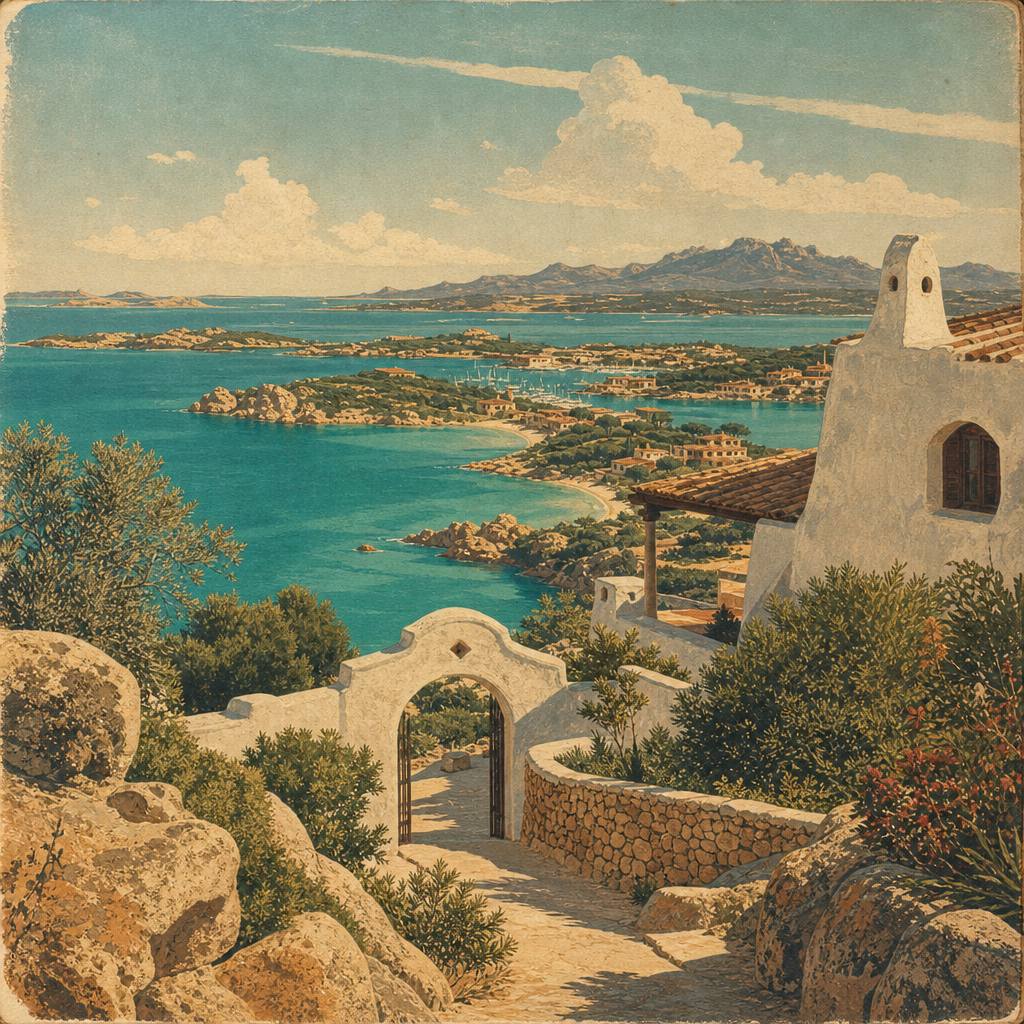
The Gulf of Arzachena in Sardinia is one of Gallura’s most important geographical features. With its granite coasts, natural inlets, and seaside villages, it offers privileged access to the Costa Smeralda. It also connects the landscapes, history, and traditions that define the island’s northeast.
- The Gulf of Arzachena and the heart of Gallura
- From ancient civilizations to the formation of the modern territory
- –Landscape, nature, and the relationship between the inland and the sea
- The Birth of the Costa Smeralda and the Transformations of the 20th Century
- Traditions, collective memory, and cultural heritage
- Arzachena beyond the tourist image
The Gulf of Arzachena and the Heart of Gallura
The Gulf of Arzachena occupies a strategic position along the northeastern coast of Sardinia. Its waters connect Cannigione, the La Maddalena Archipelago, and the main coastal destinations. For this reason, the gulf has been a point of reference for navigation and trade for centuries.
Its importance does not depend solely on its natural beauty. Indeed, since ancient times, it has encouraged human settlements and connections between the sea and the inland areas. As a result, the area still preserves clear traces of its history today.
To explore the area’s environmental context in greater depth, it is also useful to read The Landscape of Arzachena: Sea, Granite, and Mediterranean Scrub.
Additionally, the Municipality of Arzachena promotes the appreciation of local heritage through cultural and archaeological itineraries available on the official website of the Municipality of Arzachena.
From ancient civilizations to the formation of the modern region
The history of the area is rooted in prehistory. Numerous archaeological sites attest to a very ancient human presence. Among them, the Li Muri Necropolis stands out, one of the most important Neolithic complexes in Sardinia.
Later, the Nuragic civilization left a profound mark on the area. Nuraghi and giants’ tombs tell of a long cultural continuity. Over the centuries, moreover, the Gallurese stazzi helped define the relationship between communities and the landscape.
Landscape, Nature, and the Relationship Between Inland Areas and the Sea
One of the most fascinating aspects of the gulf is the variety of natural environments. On one side are coastal inlets and wetlands; on the other, granite hills and Mediterranean scrub rise up.
The granite formations shaped by time are one of Gallura’s most recognizable sights. At the same time, junipers, mastic trees, and myrtles help create a rich and distinctive ecosystem.
- Granite promontories shaped by erosion.
- Natural inlets and historic landing places.
- Wetlands of ecological value.
- Mediterranean scrub and coastal habitats.
- Countryside tied to the tradition of the stazzi.
- Archaeological sites set within the landscape.
The Birth of the Costa Smeralda and the Transformations of the Twentieth Century
In the second half of the twentieth century, the area changed profoundly. Before then, the local economy was tied mainly to agriculture and sheep farming. Later, the birth of the Costa Smeralda brought new opportunities and growing international recognition.
Karim Aga Khan IV played a central role in this process. However, the area’s history is not defined by tourism alone. On the contrary, the coast’s success developed within a region with much older roots.
Alongside the growth of tourism, attention to protecting the landscape and cultural heritage also increased. For this reason, the debate between development and conservation continues to this day.
Traditions, collective memory, and cultural heritage
Gallura preserves a strong cultural identity. Language, folk festivals, cuisine, and rural traditions continue to shape local life. Moreover, the stazzi stand as tangible evidence of the relationship between people and the land.
For visitors, learning about these aspects means going beyond the destination’s seaside image. Indeed, its cultural heritage completes and enriches the travel experience.
Arzachena beyond its tourist image
Viewing the Gulf of Arzachena solely as a gateway to the Costa Smeralda means seeing only part of it. In reality, this stretch of coastline brings together nature, history, seafaring, and collective memory.
Today, Cannigione and the other towns overlooking the gulf are an ideal starting point for exploring northeastern Sardinia. They also offer the chance to discover authentic landscapes, archaeological sites, and local traditions. For this reason, the gulf remains one of the most significant places in contemporary Gallura.