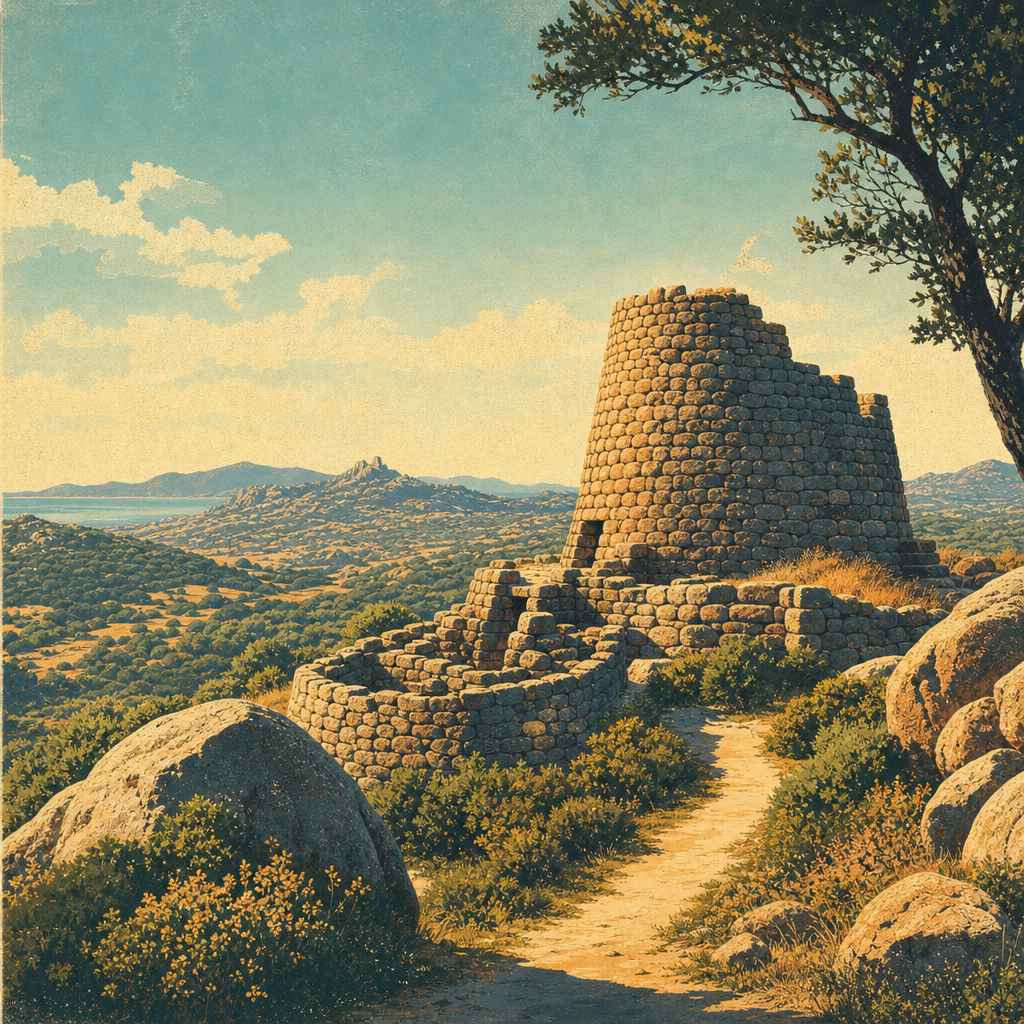
Arzachena’s Nuragic heritage offers a journey into Sardinia’s most ancient past. Among nuraghi, monumental tombs, and places of worship, the area preserves essential evidence of Gallura’s prehistory. In addition, many sites are easy to visit and make it possible to understand the connection between archaeology, landscape, and local identity. For those who wish to combine cultural discovery with outdoor excursions, this area of Gallura is a particularly interesting destination.
- Nuragic heritage of Arzachena: Arzachena and Gallura: the historical and landscape context
- Nuragic heritage of Arzachena: The Nuragic civilization in the Arzachena area
- Nuragic heritage of Arzachena: The main Nuragic and archaeological sites of Arzachena
- Practical tips for your visit
- Monuments and Landscape
- From the Ancient World to the Costa Smeralda
- Protection and enhancement
- A heritage waiting to be discovered
Arzachena’s Nuragic Heritage: Arzachena and Gallura: The Historical and Landscape Context
Arzachena occupies a strategic position in Gallura. The area features a mix of granite hills, Mediterranean scrub, and coastal stretches of great natural value. For this reason, human presence has been documented since prehistoric times.
Before the tourist development of the twentieth century, the area was mainly linked to livestock farming and agriculture. However, archaeological traces reveal a much longer history. To explore the relationship between the environment and local history in greater depth, it is also useful to read Arzachena Territory: landscapes between sea and granite.
Official information on cultural heritage is also available on the portal of the Municipality of Arzachena. In addition, the distribution of the sites shows how ancient communities chose areas favorable both for controlling the territory and for accessing natural resources.
Nuragic heritage of Arzachena: The Nuragic civilization in the Arzachena area
The Nuragic civilization developed during the Bronze Age and continued into the Iron Age. The nuraghi are the best-known symbol of this culture. However, this heritage also includes villages, collective tombs, and places of worship.
In Arzachena, the concentration of monuments is particularly significant. Moreover, many structures show a close integration with Gallura’s granite landscape.
Nuragic communities did not only build defensive structures. On the contrary, they organized complex settlements where social, productive, and religious activities took place. As a result, visiting archaeological sites makes it possible to understand concrete aspects of daily life from thousands of years ago.
Nuragic heritage of Arzachena: The main Nuragic and archaeological sites of Arzachena
Nuraghe Albucciu
Nuraghe Albucciu is one of the most representative monuments in the area. The structure takes advantage of the natural features of the terrain and offers a clear reading of the construction techniques of the time. In addition, the site’s location helps illustrate the relationship between architecture and the environment.
Giants’ Tomb of Coddu Vecchiu
This renowned collective burial site is striking for its large exedra and monumental stele. It also represents essential evidence of Nuragic funerary practices. Even today, it is one of the most visited places in the area thanks to its excellent state of preservation.
La Prisgiona ComplexLa Prisgiona includes a nuraghe and a large village. As a result, the site helps visitors understand the daily life and social organization of ancient communities. In addition, the visitor route makes it possible to observe different areas within a single archaeological complex.
Malchittu Temple
The Malchittu Temple is generally interpreted as a place of worship. Although some aspects remain under study, the site attests to the importance of the religious dimension in the area. For this reason, it is an interesting stop for those who wish to explore the beliefs of the Nuragic populations in greater depth.
Practical tips for your visit
To best organize your itinerary, it is advisable to check opening hours, access procedures, and the availability of guided tours in advance. In addition, during the warmer months, it is best to bring water, a hat, and footwear suitable for outdoor routes.
Many sites can be visited in a single day. However, spending more time exploring allows you to better appreciate the differences between nuraghi, monumental tombs, and sacred areas. Finally, a local guide can provide useful historical and archaeological insight.
Monuments and Landscape
One of the most fascinating aspects of the local archaeological heritage is its relationship with the environment. Indeed, the monuments do not appear isolated, but rather integrated into a landscape system that is still recognizable.
The granite rocks influenced both the choice of settlements and the construction techniques. Consequently, visiting these sites also means observing the long-term evolution of the territory.
At the same time, the landscape helps make the visit especially evocative. As a result, many archaeological routes make it possible to combine historical interest with observation of the natural environment.
From the Ancient World to the Costa Smeralda
In the twentieth century, Arzachena underwent profound transformations with the development of the Costa Smeralda. However, the history of the area cannot be reduced solely to its tourist dimension.
The archaeological sites bear witness to a continuity of human presence spanning millennia. Therefore, they represent an important point of reference for understanding the cultural identity of Gallura.
In this sense, the prehistoric evidence offers a broader perspective on local history. It also shows how the area was inhabited and valued long before contemporary transformations.
Protection and enhancement
The conservation of monuments is not only about protecting structures. It also includes research, outreach, and the promotion of cultural heritage.
In recent decades, the Municipality of Arzachena has supported initiatives dedicated to protecting the sites. Thanks to these activities, visitors and residents can gain a better understanding of the area’s history.
At the same time, archaeological studies continue to enrich the knowledge available. As a result, visiting the sites also takes on an educational value that goes beyond simple tourist interest.
A heritage waiting to be discovered
Visiting Arzachena’s Nuragic heritage means going beyond the best-known image of the Costa Smeralda. Nuraghi, tombs, and places of worship tell an ancient and complex story. At the same time, they offer a valuable lens through which to understand the landscape and identity of contemporary Gallura. For this reason, they are a recommended stop for both curious tourists and enthusiasts of archaeology and Sardinian history.