The Costa Smeralda in the 1960s is often associated with the birth of international tourism in Sardinia. However, before the development that made this part of Gallura famous, the area was profoundly different. Isolated bays, Mediterranean scrub, rural stazzi, and a direct relationship with the sea defined a landscape shaped above all by nature. To understand the Costa Smeralda of today, it is useful to know what existed before the transformation.
- The original territory of the Gallura coast
- Coasts, coves, and landscape forms
- The Mediterranean scrub and the natural environment
- The local economy before tourism
- The relationship between communities and the sea
- The turning point of the 1960s
- What remains of the previous landscape
- A territorial memory beyond the myth
The original territory of the Gallura coast
The coastal stretch now known as the Costa Smeralda lies largely within the territory of Arzachena, in northeastern Gallura. Before the 1960s, however, there was no single name identifying the area as a tourist destination.
On the contrary, the area consisted of coves, granite headlands, small beaches, and land used for farming and pastoral activities. In addition, the population lived mainly in the stazzi, the traditional rural settlements of Gallura.
The coasts were less frequented than the inland areas. In fact, infrastructure was limited and travel was more difficult. As a result, the landscape retained a broad, open, and sparsely urbanized character.
The large granite rocks, sculpted by the wind and the elements, were already one of the area’s most recognizable features. Therefore, the territory possessed a strong natural identity long before the arrival of tourism.
For more information about the local area, you can consult the Municipality of Arzachena.
Coasts, Inlets, and Landscape Forms
Long before the international fame of its beaches, the coast had an almost wild appearance. The bays followed one after another without marinas, large accommodation facilities, or scenic roads.
In many cases, the beaches could be reached only by paths used by shepherds and local residents. Moreover, the absence of urbanization helped preserve a particularly evident environmental balance.
Places now famous, such as Liscia Ruja, Romazzino, Capriccioli, Cala di Volpe, and the beaches of Pevero, already existed in their natural state. However, they were not yet considered international attractions.
The bays offered shelter to small boats. At the same time, they served as important landmarks for those who knew the land and the sea.
The Mediterranean scrub and the natural environment
One of the dominant elements of the landscape was the Mediterranean scrub. Junipers, mastic trees, myrtles, strawberry trees, and rockroses covered vast stretches of the coast.
During the warmer seasons, the scents of the vegetation mingled with the sea air. As a result, the area offered a very distinctive sensory experience.
- Juniper
- Myrtle
- Mastic
- Strawberry tree
- Rockrose
- Mediterranean aromatic essences
Wildlife found refuge in relatively undisturbed environments. Meanwhile, the landscape alternated between rocky outcrops, pastures, and small agricultural plots.
Although human presence was ancient, the level of transformation remained limited. For this reason, many aspects of the original environment remained visible even after tourism development began.
The Local Economy Before Tourism
Before the birth of the modern tourist destination, the local economy was based mainly on livestock farming, agriculture, and craftsmanship.
The stazzi were at the heart of economic and family life. They also allowed for relatively independent management of the available resources.
Communications were limited and infrastructure was scarce. As a result, daily life followed rhythms very different from those of today.
The coast was not yet considered the area’s main economic driver. However, the sea was an important resource for local communities and traditional activities.
The relationship between communities and the sea
For the inhabitants of coastal Gallura, the sea was a concrete, everyday presence. It was not seen primarily as a place of leisure, but rather as a space for work and connection.
Fishing activities were small-scale. In addition, the bays offered natural landing places and stopping points for boats.
960sToday, many visitors see the sea above all for its scenic value. In the past, however, a practical and functional view prevailed.
Even today, numerous place names and local stories preserve the memory of this historic relationship with the coast and the Mediterranean.
The Turning Point of the 1960s
In the early 1960s, the area entered a new phase in its history. During that period, the project that would give rise to the Costa Smeralda as an organized tourist destination began to take shape.
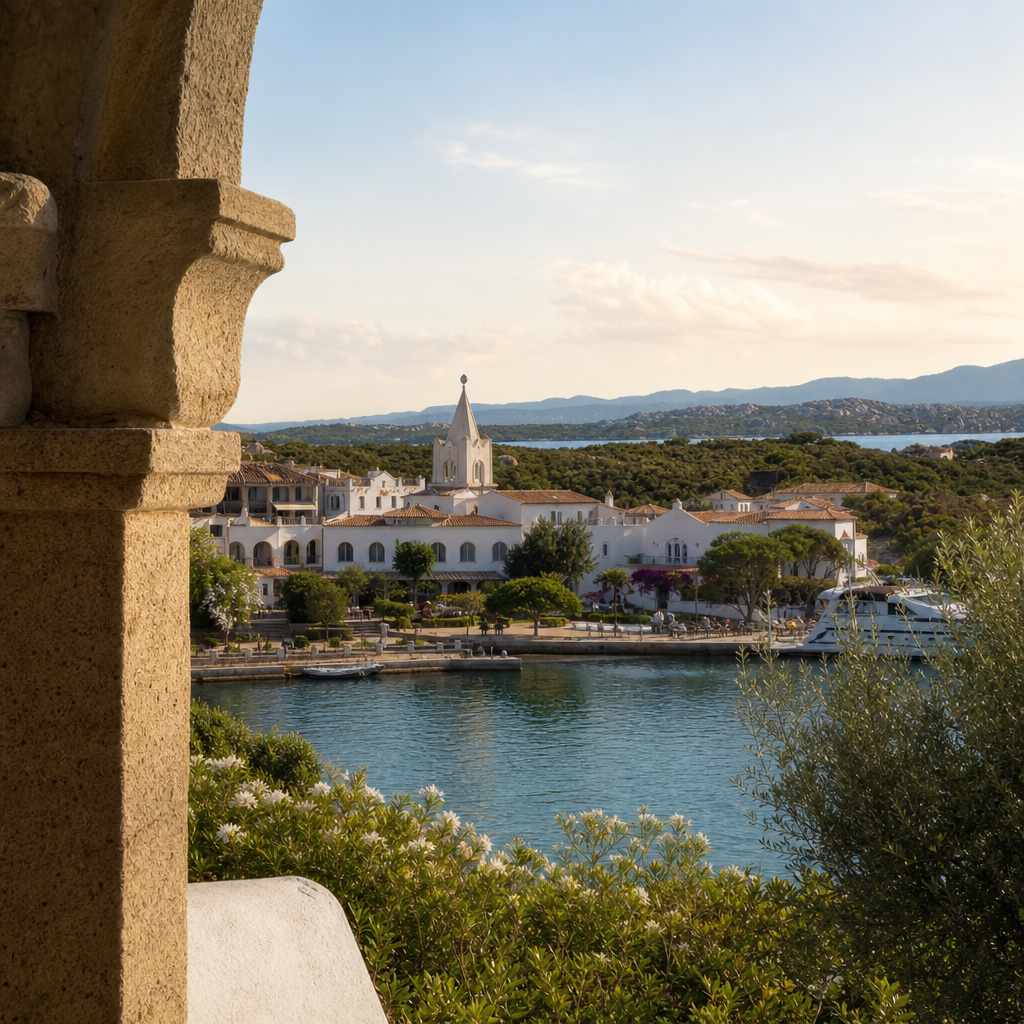
Later, new settlements and infrastructure were built. Among them, Porto Cervo became the symbolic center of development.
- Birth of the Modern Tourism Project
- Development of Porto Cervo
- Development of accommodation facilities
- Enhancing the bays and landscape
- Definition of a Mediterranean Architectural Identity
However, many interventions sought to maintain a dialogue with the natural setting. For this reason, the original landscape continued to influence the area’s identity.
What Remains of the Earlier Landscape
Despite the changes of the late twentieth century, numerous elements of the original territory are still recognizable.
Indeed, the shapes of the granite, the structure of the bays, and the presence of the Mediterranean scrub continue to characterize the coast. In addition, the views toward the La Maddalena archipelago retain significant scenic value.
By carefully observing the area, it is possible to grasp the dialogue between the historic environment and modern transformations. As a result, visitors can better understand the evolution of the Costa Smeralda.
A Territorial Memory Beyond the Myth
The Costa Smeralda is often associated with famous beaches, marinas, and iconic architecture. And yet, behind this image lies a much longer history.
Before the 1960s, these coasts were an integral part of Gallura’s rural and seafaring life. The coves now visited by travelers from all over the world were surrounded by trails, pastures, and Mediterranean vegetation.
Understanding this historical phase allows us to read the territory with greater depth. Ultimately, the contemporary Costa Smeralda was born from the encounter between an extraordinary natural landscape, local communities, and the transformation that changed its destiny.
To learn more about the figure connected to the origins of the tourism project, you can visit the Prince Karim website.