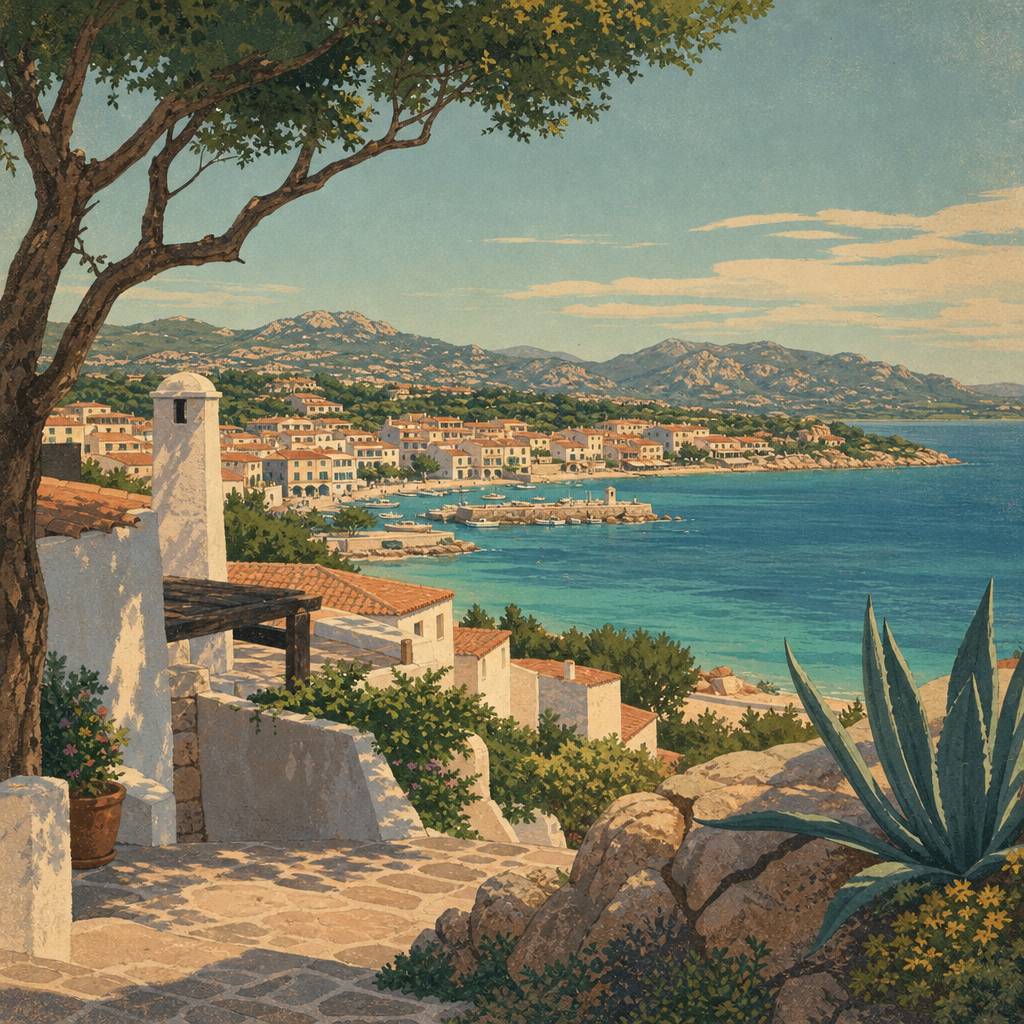
Cannigione and the Gulf of Arzachena represent one of the most fascinating areas of northeastern Sardinia. Here, sea, landscape, history, and territorial development come together naturally. Moreover, those who explore this part of Gallura discover a reality that goes beyond the better-known image of the Costa Smeralda. Understanding this area means observing the coast from a broader perspective, one capable of bringing together tradition and contemporary transformation.
- The Gulf of Arzachena as a geographical and cultural space
- Cannigione: from fishing village to regional connection point
- The birth of the Costa Smeralda and the role of the Arzachena area
- Porto Cervo, an international symbol and part of a broader systemCoastal routes, beaches, and landscapes between the gulf and the Costa Smeralda
- Architecture, Visual Identity, and Dialogue with the Landscape
- Cannigione and the Gulf of Arzachena in the memory of the contemporary Mediterranean
- The Gulf of Arzachena as a geographical and cultural space
The Gulf of Arzachena occupies a strategic position along the northeastern coast of Sardinia. Its waters extend inland, creating a natural system of bays, inlets, and landing places. Over the centuries, this system has fostered connections between the Gallura hinterland and the maritime routes of the Mediterranean.
The shape of the gulf highlights a fundamental aspect: the sea is not a barrier. On the contrary, it is an element of connection. Through these waters, trade exchanges, cultural relationships, and economic activities developed, helping to shape the identity of the area.
Arzachena, located inland from the coast, has built its relationship with the sea through a network of coastal towns. Among these, Cannigione occupies a central position. As a result, the gulf becomes a meeting point between rural landscape, urban settlements, tourism, and maritime activities.
The Costa Smeralda itself must be understood within this broader context. Indeed, its most famous destinations are part of a territorial system made up of ports, beaches, infrastructure, towns, and landscapes that define the identity of coastal Gallura.
To explore the area’s geographical context in greater depth, it may also be useful to learn about the territory of Arzachena between sea and granite.
Cannigione: from a fishing village to a regional connection point
Cannigione began as a small village tied to fishing and local trade within the gulf. Over time, however, it took on an increasingly important role as a point of access to the sea for the Arzachena area.
Unlike some areas developed primarily through large-scale tourism projects, Cannigione has maintained a strong connection with the daily life of its resident population. For this reason, it still preserves an authentic and welcoming atmosphere today.
The marina and waterfront are central elements of its contemporary identity. However, its function goes beyond nautical hospitality. Indeed, Cannigione is an important connection hub for numerous coastal destinations and for the Maddalena Archipelago.
- Direct connections to Arzachena and the Gallura hinterland.
- Privileged access to the Gulf of Arzachena.
- Departures for boat excursions to La Maddalena.
- Close to the main destinations of the Costa Smeralda.
- Services dedicated to boating and tourism.
Therefore, this ability to connect different areas makes Cannigione a strategic place for understanding Sardinia’s northeastern coast.
The Birth of the Costa Smeralda and the Role of the Arzachena Area
The history of the Costa Smeralda is closely tied to the Arzachena area. In the 1960s, a project took shape that was destined to change the face of this part of Sardinia.
The goal was not merely to develop new tourist facilities. Rather, the aim was to create a destination capable of enhancing the area’s natural features. For this reason, urban planning criteria were adopted that focused on the integration of architecture and the environment.
- Respect for the natural morphology of the coastline.
- Use of materials and colors inspired by local tradition.
- Limitation of building heights.
- Enhancement of panoramic views.
- Harmonious integration of buildings into the landscape.
As a result, the Gallura coastline and its natural forms became the ideal setting for a destination now known internationally.
Porto Cervo, an international symbol and part of a broader system
Porto Cervo is undoubtedly the best-known symbol of the Costa Smeralda. Its squares, marina, and distinctive architecture have made it one of the most recognizable destinations in the Mediterranean.
From the initial planning stage, Porto Cervo was conceived as the main center of the entire territorial system. In addition, its public spaces were organized to encourage dialogue between buildings and the natural environment.
- The Porto Cervo Marina.
- The small plazas and pedestrian areas.
- The Stella Maris Church.
- The historic hotels of the Costa Smeralda.
- Architecture designed in harmony with the landscape.
Despite its international fame, Porto Cervo takes on a fuller meaning when considered together with Cannigione, Baja Sardinia, and the Gulf of Arzachena.
Coastal routes, beaches, and landscapes between the gulf and the Costa Smeralda
One of the most fascinating aspects of this area is the scenic continuity that connects the gulf to the Costa Smeralda. Along the coastline, sheltered bays, granite promontories, pale sandy beaches, and stretches of Mediterranean scrub alternate.
Moreover, the geographical characteristics of the area have influenced both human settlements and tourism development. Nature, therefore, is not merely a scenic backdrop.
- Cannigione.
- Baja Sardinia.
- Liscia Ruja.
- Capriccioli.
- Romazzino.
- Pevero.
- Poltu Quatu.
Each area has different characteristics. However, they all share a strong connection with the natural landscape. The beaches are an integral part of an ecosystem that includes coastal vegetation, rock formations, and open views of the sea.
For information about the archipelago and the surrounding marine environment, you can consult the La Maddalena Archipelago National Park.
Architecture, visual identity, and dialogue with the landscape
One of the elements that contributed most to the success of the Costa Smeralda is the creation of a distinct architectural identity. This identity is based on a constant dialogue between buildings and the natural environment.
The earliest projects avoided forms foreign to the Mediterranean context. Instead, they favored articulated volumes, light colors, courtyards, small squares, and pedestrian pathways.
The squares of Porto Cervo are a significant example of this approach. Here, architecture does not dominate the landscape. On the contrary, it enhances its features.
Naturally, the debate over coastal development remains open. On the one hand, the value of the original landscape planning is recognized. On the other, challenges related to environmental conservation and the management of tourist flows are emerging.
Cannigione and the Gulf of Arzachena in the memory of the contemporary Mediterranean
Viewed as a whole, Cannigione and the Gulf of Arzachena tell a story that goes beyond beach tourism. Here, the heritage of historic Gallura, the transformations of the twentieth century, and the new dynamics linked to boating all come together.
The Costa Smeralda cannot be understood solely through its most famous places. In fact, its meaning fully emerges when it is placed within a broader geography made up of gulfs, landing places, towns, and landscapes.
For today’s visitor, Cannigione represents one of the most effective keys to understanding this territory. Here, the everyday life of the local community coexists with the international influence that has made the coast famous.
Finally, among the granite rocks of Gallura, the waters of the gulf, and the architecture that has shaped the history of the coast, a shared memory emerges. It is the story of a territory that has been able to evolve while maintaining a strong connection with its geography and with the history of Arzachena.