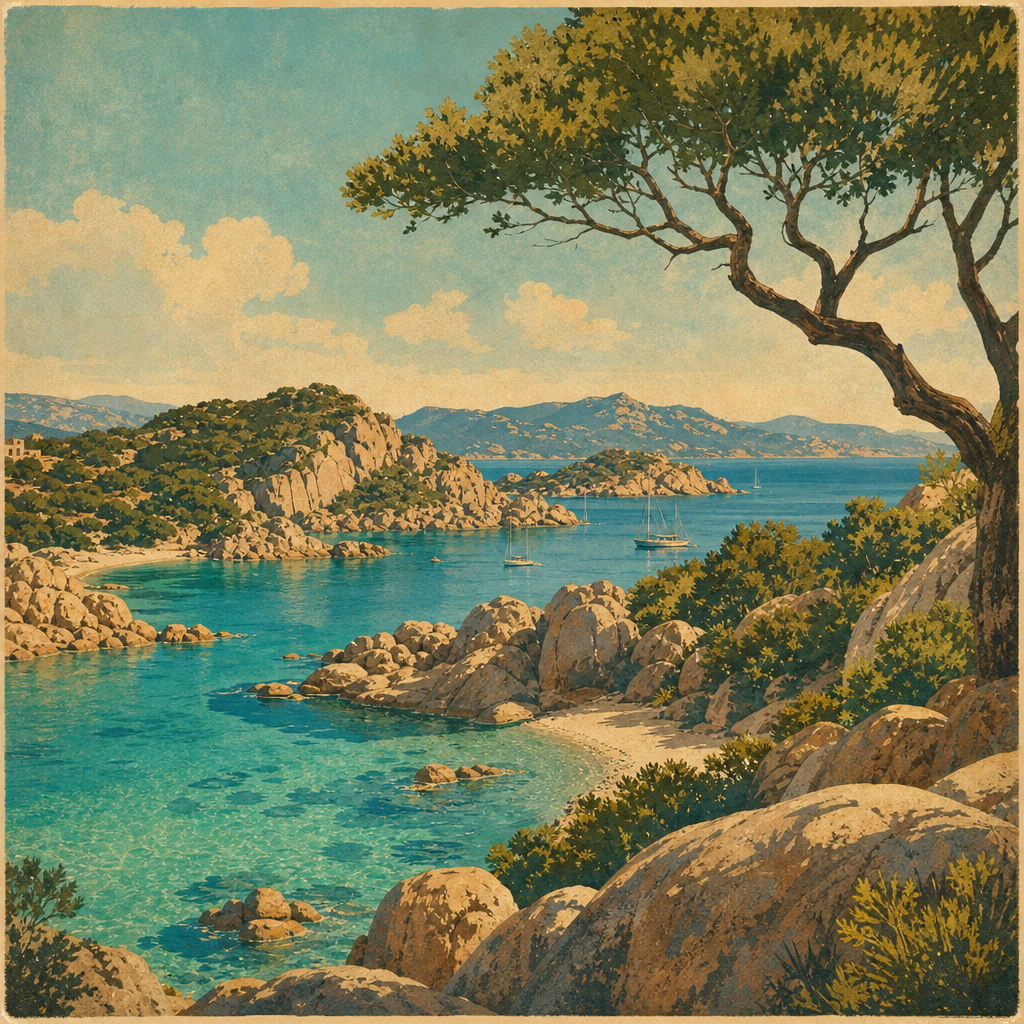
Costa Smeralda from the sea: this celebrated stretch of northeastern Gallura reveals all its uniqueness. Observing the coastline from a boat, in fact, brings out details that often escape those who travel along it by land. Wind-sculpted granite promontories, sheltered coves, and beaches with transparent waters come into view. Moreover, the landscape maintains a balance that has helped make it one of the most recognizable in the Mediterranean. Between the Gulf of Cugnana and the Gulf of Arzachena, the sea offers a privileged perspective for understanding the history, geography, and evolution of this area.
- The coastal area and the perspective from the sea
- From the coasts of Gallura to the birth of the Costa Smeralda
- Sailing along bays, coves, and inlets
- Porto Cervo, the maritime heart of the Costa Smeralda
- Architecture, landscape, and visual identity
- Beaches, landing spots, and landmarks for those arriving by sea
- A coast between memory, transformation, and Mediterranean continuity
The coastal territory and the perspective from the sea
The Costa Smeralda lies within the municipality of Arzachena, in an area characterized by a particularly intricate coastal formation. Bays, coves, promontories, and small natural moorings follow one another along the shoreline. As a result, the landscape appears varied and dynamic. To explore the area’s geographical context in greater depth, it may also be useful to read Arzachena Territory: landscapes between sea and granite.
From the sea, it is possible to grasp more clearly the relationship between the natural elements that define the identity of the coast. The shades of the water change constantly depending on the depth of the seabed and the composition of the submerged terrain. As a result, hues are created that range from turquoise to emerald green. This very color effect has contributed to the area’s international fame.
Navigation also makes it possible to understand the geographic role of the Costa Smeralda in the western Mediterranean. From many points along the coast, in fact, one can sense the proximity of the La Maddalena Archipelago and the Strait of Bonifacio. These elements have influenced the history of maritime trade and coastal activities in Gallura.
From the Coasts of Gallura to the Birth of the Costa Smeralda
Before the great transformation that took place in the twentieth century, this part of Sardinia was characterized by a limited human presence. The main activities were linked to pastoralism, agriculture, and fishing. Meanwhile, tourism was still a marginal phenomenon.
The change began in the 1960s thanks to the initiative of Prince Karim Aga Khan IV and a group of investors. They identified enormous tourism potential in the area. However, the goal was not simply to build hotels and lodging facilities. The aim was to develop a territorial project capable of enhancing the landscape without completely altering its identity.
The founding of the Costa Smeralda Consortium marked a decisive turning point. As a result, architects and urban planners were brought into the design of buildings and infrastructure integrated with the surrounding environment. This approach helped create a coherent and recognizable image, still associated with the destination today.
Sailing along bays, coves, and inlets
One of the most fascinating aspects of cruising along the Costa Smeralda is the constant alternation of scenery. Each stretch of coastline has different characteristics and, at the same time, offers ever-changing views.
- Liscia Ruja, one of the largest and most famous beaches in the area.
- Cala di Volpe, famous for its deep natural inlet.
- Capriccioli, characterized by small bays separated by granite outcrops.
- Romazzino, known for the intense colors of its sea.
- Spiaggia del Principe, considered one of the most picturesque beaches on the coast.
- Grande and Piccolo Pevero, important landmarks for those navigating the area.
From the sea, these beaches do not appear as isolated places. On the contrary, they form a single landscape system. The differences often depend on natural details. For example, the shape of the rocks, exposure to the winds, the presence of Mediterranean scrub, and the configuration of the seabed all play a role.
Naturally, anyone sailing along this stretch of coast should always pay attention to weather conditions and environmental regulations. For official information on navigation safety and notices to mariners, it is useful to consult the Italian Coast Guard website.
Porto Cervo, the maritime heart of the Costa Smeralda
Among all the iconic places along the coast, Porto Cervo holds a central position. Built around a natural inlet well suited to the mooring of boats, it has become one of the most prestigious marinas in the Mediterranean.
Arriving by sea is the best way to appreciate its urban layout. Moreover, the buildings follow the contours of the land. They are arranged along the bay without creating a visual barrier between land and sea.
The Porto Cervo Marina is an important point of reference for international yachting. In addition to its operational function, it also plays a significant role in shaping the image of the destination.
Architecture, Landscape, and Visual Identity
One of the aspects that makes the Costa Smeralda immediately recognizable is the relationship between architecture and nature. From the sea, in fact, many buildings seem to emerge discreetly among the vegetation and granite rocks.
The architects involved in the early stages of development sought to reinterpret certain elements of Mediterranean tradition through a contemporary language. As a result, fragmented volumes, local materials, natural colors, and open views toward the sea emerged.
he seaThis attention to the landscape helped shape the Costa Smeralda’s international image. Over time, it turned the area into a benchmark for numerous tourism projects.
Beaches, landing points, and landmarks for those arriving by sea
For those exploring the coast by boat, the beaches serve as true points of orientation. Each has specific characteristics that make it easily recognizable.
Grande Pevero stands out for its wide opening and for the panorama of the surrounding hills. Piccolo Pevero, on the other hand, offers a more intimate atmosphere. Capriccioli is striking for the presence of granite rocks that divide the various coves. Likewise, Cala di Volpe is famous for its inner shape and its evocative natural setting.
Many of these areas are now subject to specific environmental protection measures. For this reason, protecting marine and coastal ecosystems is a fundamental element in preserving the natural heritage that has made the Costa Smeralda famous around the world.
Finally, slow cruising allows you to observe details that would otherwise remain invisible. You can notice cavities carved into the rock, seabeds with shifting colors, and stretches of vegetation that seem to skim the water.
A coast between memory, transformation, and Mediterranean continuity
Seen from the sea, the Costa Smeralda appears as the result of the encounter between nature and human design. Its bays and inlets existed long before the birth of the modern tourist destination. However, the twentieth century transformed this stretch of Gallura into an international symbol.
For visitors arriving by sea, the Costa Smeralda is not merely a seaside destination. It is a place where geography, culture, architecture, and the environment intertwine in a unique way. Thus, every landing place, every bay, and every promontory helps shape a story in constant evolution. At the same time, its connection to Mediterranean roots and to the landscape that has defined its identity remains alive.